Articles · October 1, 2026
Buying a horse property in Ocala and Marion County
By Janie Coffey | Florida Equestrian Properties · 6 min read
The direct answer
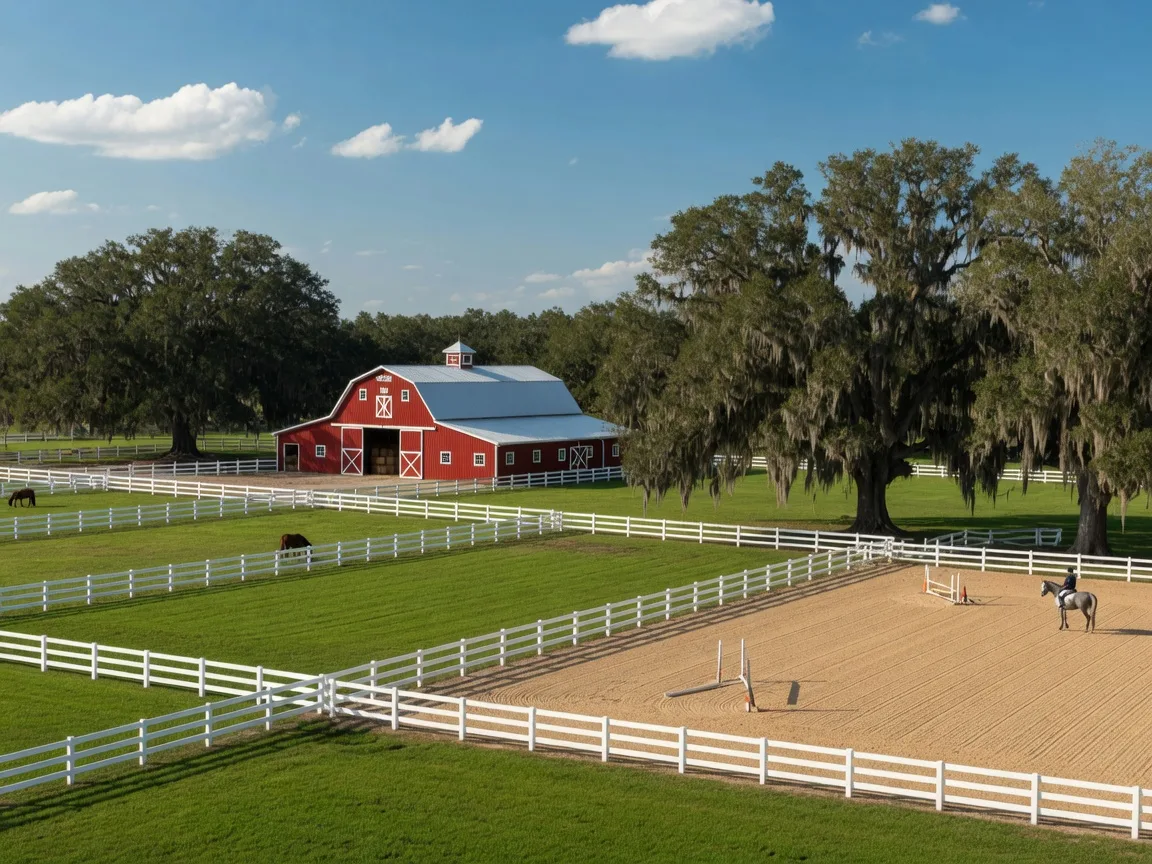
Buying in Ocala and Marion County means choosing a farm corridor, confirming zoning and agricultural classification, and evaluating the working property against the deepest equestrian infrastructure in Florida. The market is defined by verifiable numbers, not marketing: Marion County has more horses and ponies than any other county in the United States, and it holds the registered trademark Horse Capital of the World.
My role is to help you compare corridors and properties honestly, measure drive times to the venues you actually use, and confirm the land-use rules before you commit.
Start with the numbers that define the market
Marion County is home to roughly 75,000 horses and ponies, more than any other U.S. county, and about 35% of Florida's horses. More than 1,200 horse farms sit across the county, most concentrated in the Farmland Preservation Area, roughly 200,000 acres in the county's northwest protected by county ordinance to keep horse country intact.
The World Equestrian Center, the largest equestrian complex in the United States, is at 1750 NW 80th Ave in northwest Ocala, roughly 7 miles from downtown. The Ocala Breeders' Sales Company holds regular Thoroughbred auctions, and specialized equine hospitals serve the region.
- Roughly 75,000 horses and ponies, more than any other U.S. county
- About 35% of Florida's horses and a deep pool of trainers and farriers
- More than 1,200 horse farms, most in the Farmland Preservation Area
- The World Equestrian Center and the Ocala Breeders' Sales Company anchor the scene
“The county has more horses/ponies than any other in the U.S., 35% of Florida's horses are in the county.”
Marion County Government, Horse Capital of the World Source
Choose your corridor
Ocala horse country is not one uniform area. Each corridor has a different character and a different drive time to the World Equestrian Center, so the corridor choice is a lifestyle choice as much as a property choice.
| Corridor | Character | Distance to WEC |
|---|---|---|
| Northwest Ocala | The epicenter of equestrian sport, anchored by the World Equestrian Center and the majority of the Farmland Preservation Area. | WEC is here; roughly 7 miles from downtown Ocala |
| Reddick | The Golden Corridor along NW Hwy 225 and County Road 225A, with large estate farms and a deep horse-farm tradition. | About 13 miles, roughly 20 to 25 minutes |
| Anthony | A quieter community northeast of Ocala with farms along the northeast corridors. | About 15 to 20 minutes depending on the property |
| Citra | Northwest of Ocala, with horse farms along Hwy 318 and the northwest farm corridors. | About 20 to 30 minutes depending on the property |
Marion County farm corridors
Evaluate the working property
Once you have narrowed the corridor, the same evaluation standard applies: the home, the barn, and the land are one working package. I bring a licensed contractor's eye and firsthand horse farm experience to this part of the search.
- Barn structure, stalls, flooring, and ventilation for the Florida summer
- Usable acreage: what is fenced, dry, and safe for horses, beyond the total
- Drainage across pastures, paddocks, and around the barn and house
- Fencing type and condition, and whether it is safe for horses
- Arena footing, depth, and how it drains
- Water and power at the barn, plus trailer access and storage
Confirm zoning and agricultural classification
Marion County's Land Development Code sets what a property permits as of right, and the county planning and zoning office is the authority to confirm it. Ask whether horses are permitted on the parcel, whether there is a limit on their number, and whether boarding, training, or a commercial lesson business is allowed or requires a special permit.
Separately, agricultural classification under Florida Statute 193.461 can lower property taxes when land is in bona fide agricultural use, such as breeding or boarding for compensation. The DR-482 application is due by March 1 each year, and the county property appraiser evaluates each parcel's use. These are parcel-specific determinations, so we verify them with the county before you go far.
A note on my role: I can flag the questions and help you get the right answers, but I do not replace the county, an attorney, an engineer, or a land-use specialist. On a specific parcel, their review is the authority.
Measure drive times, not county lines
Two farms in the same corridor can sit very different distances from the same vet or venue. We make drive times from the property to the services you rely on part of the search, so you know exactly what daily life will look like before you commit.
Frequently asked questions
The questions below come up in most searches, and honest answers make the difference between a right fit and a costly mistake. If yours is not here, I would be glad to answer it directly.
How much acreage do I need for horses in Marion County?
UF/IFAS gives a rule of thumb of 2 to 2.5 acres of pasture per 1,000-pound horse, with 1 to 1.5 acres adequate on productive, well-managed sites during the summer growing season, and a minimum of about one-tenth of an acre per horse for turnout and exercise. The honest answer for a specific property depends on soil, drainage, pasture management, and how much you supplement with feed.
Is every Marion County property zoned for horses?
No. Zoning and permitted uses vary by parcel, and the county planning and zoning office is the authority to confirm them. We verify the status of properties you care about before you go far in the process.
How close to the World Equestrian Center should I be?
It depends on how often you use the venue. If you compete regularly, a property in northwest Ocala or along the Reddick corridor may suit you. If you visit occasionally, a longer drive may be a fair trade for more land or more quiet. We measure the actual drive from each property rather than assuming equal access.
About the author
Janie Coffey is a Northeast Florida real estate advisor with eXp Realty and a licensed general contractor. Based in St. Augustine, she helps buyers and sellers navigate equestrian properties, farms and acreage, and historic and waterfront homes.
- Zillow
- Realtor.com
- Instagram | @janiec
- Gorgeous Florida Homes Network | Janie's agent bio
- eXp Realty | Legacy & Land Advisory