Buying Guide
How to buy a horse farm in Florida with confidence.
Buying an equestrian property is about more than finding a beautiful home. This guide walks through how we help buyers evaluate the whole working property, so the home, barns, and land all support the way you live with horses.
The process
How we work together.
01
Clarify your priorities
Start with the number of horses, how you ride or compete, how much time you can spend on farm work, and which amenities matter. Write these down before you look at listings, and use them to filter.
02
Compare across counties
St. Johns, Marion, and Alachua each support a different equestrian life. We weigh equine services, drive times to venues and vets, and the character of the community before you focus on specific properties.
03
Evaluate the working property
We inspect the land and facilities with a checklist: barn structure, stalls, arena footing, pasture quality, drainage, fencing, water access, and how the layout supports daily chores.
04
Ask the right specialist questions
We confirm zoning and permitted uses, agricultural classification, well and septic, flood risk, and soil conditions, and bring in an inspector, contractor, or land specialist where the property warrants it.
05
Move forward with confidence
We line up inspections and closing on a timeline that fits the move of your household and horses, so the details are handled before the horses arrive.
The working property
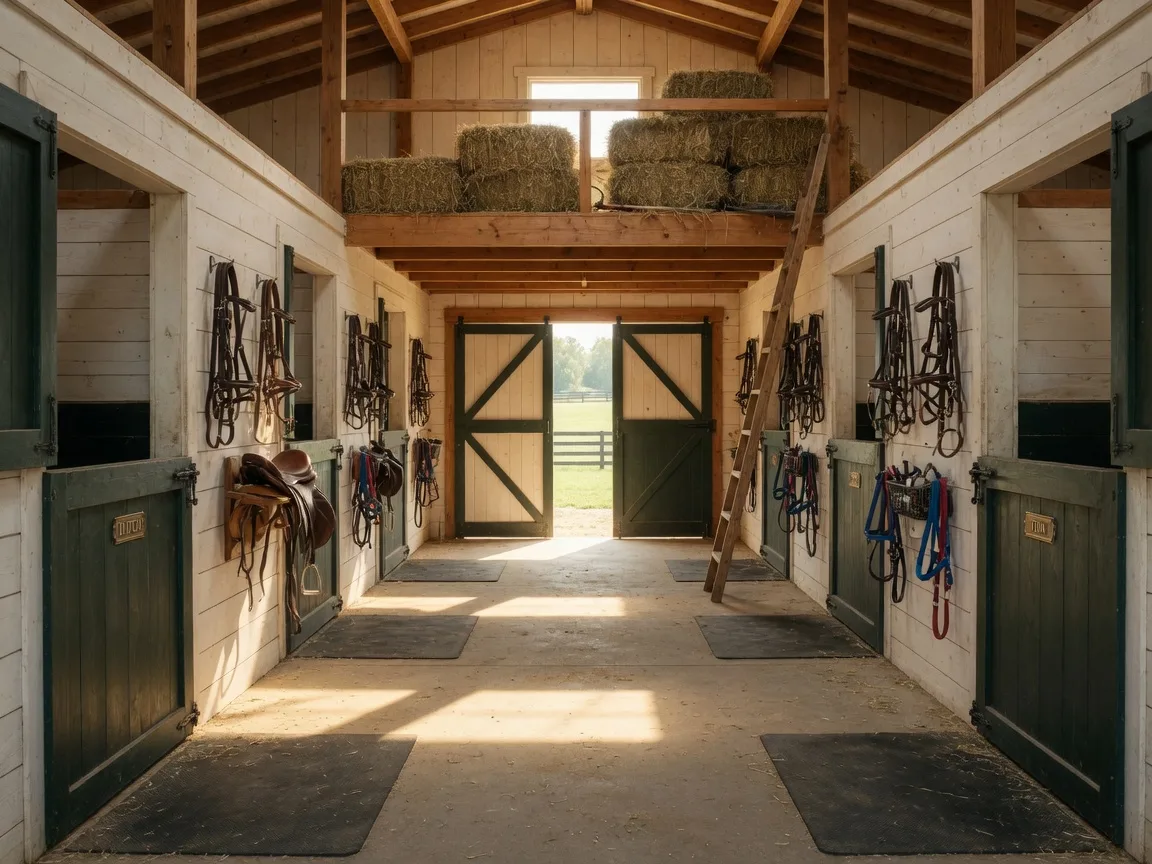
Beautiful barn, functional barn.
A beautiful property can still raise practical questions. We help you look carefully at the facilities and land, and understand what will need to change and how much effort that will take.
- Barn structure: roof, framing, stall floors, and ventilation
- Pasture quality: soil, drainage, and how fields hold up in wet months
- Fencing: type, condition, and whether it is safe for horses
- Arena and riding areas: footing depth and drainage
- Water access: troughs, hydrants, and pressure at the barn
- Zoning and permitted land uses, confirmed with the county
- Agricultural classification and property tax implications
- Flood risk and how water moves across the property
Land & drainage
How do I evaluate usable acreage on a horse farm?
Soil, drainage, and how the land is laid out determine how much of the acreage your horses can actually use. Separate three numbers when you evaluate land: total acreage in the listing, usable turnout that is fenced, dry, and safe for horses, and grazing capacity, which depends on pasture quality, soil, and management. There is no universal acreage rule that fits every property; the right figure comes from evaluating the land itself. We help you translate your horse count and turnout plan into what the property needs to provide.
Ask about the history of the land, how fields have been managed, and whether any acreage is wetland or otherwise not usable for horses. Those answers change what the acreage is actually worth to you.
UF/IFAS EDIS, “Pastures and Forage Crops for Horses” Source“On less productive sites, a mature horse might require 2–2.5 acres of pasture or 1–1.5 acres on productive, well-managed pasture during the summer.”
Property visits
Questions to ask at every visit.
Download a version of this list, take it with you, and write down the answers while you are on the property. The same questions at every farm make comparison honest.
How old is the barn, and what is the structure built from?
What is the stall flooring, and how does it drain and clean?
Where does water stand after a hard rain, and how does the land shed it?
What fencing is in place, and when was it last replaced?
Is there water and electricity at the barn and in the paddocks?
How many horses has this pasture carried, and how is it managed?
What does the zoning permit, and is the parcel in an agricultural classification?
Are the well, septic, and any irrigation systems in working order?
Inspections
Plan the specialist reviews before you offer.
The right inspections, done at the right time, are how you separate a manageable purchase from a costly surprise. Not every property needs every review, so we help you prioritize: an aging barn, low-lying fields, or an unknown well are exactly the triggers for a closer look.
- General home inspection by a licensed inspector
- Barn and outbuilding review by a contractor or builder
- Well and septic evaluation, including water quality
- Drainage and land review, including the flood zone designation
- Soil and pasture evaluation where grazing matters
- Termite and wood-destroying organism report
- Survey confirming property lines and fencing locations
- Zoning and land-use verification with the county
Flood & drainage
How do I check a horse property for flooding or drainage problems?
Walk the property when the ground is wettest, and again after a hard rain if you can. Look for standing water in low spots, in the pastures, and near the barn and house; check that ditches, swales, and culverts move water off the site; and confirm where water crosses the drive and paddocks. Ask the seller about flood history, then check the property's flood zone designation on the FEMA flood map.
A property in a Special Flood Hazard Area sits in the 1-percent-annual-chance floodplain, which is what flood insurance and county floodplain rules key off. Drainage problems are among the most expensive to fix later, so a drainage or land consultant is worth engaging when anything looks questionable.
FEMA, “Special Flood Hazard Area (SFHA)” glossary Source“An area having special flood, mudflow or flood-related erosion hazards and shown on a Flood Hazard Boundary Map (FHBM) or a Flood Insurance Rate Map (FIRM)…”
The flood checks that matter
- Walk the wettest ground, and again after hard rain
- Look for standing water in pastures and near buildings
- Check that ditches, swales, and culverts move water off site
- Confirm the flood zone designation on the FEMA map
- Ask the seller about flood history
- Engage a drainage or land consultant if anything looks questionable
Ready when you are
Let's start your search.
Tell us what you are looking for, and our team will help you compare properties across Florida horse country and evaluate them with a practical eye.
Relocating with horses? Read the relocation guideStart your search
Share what you are looking for and our team will be in touch.