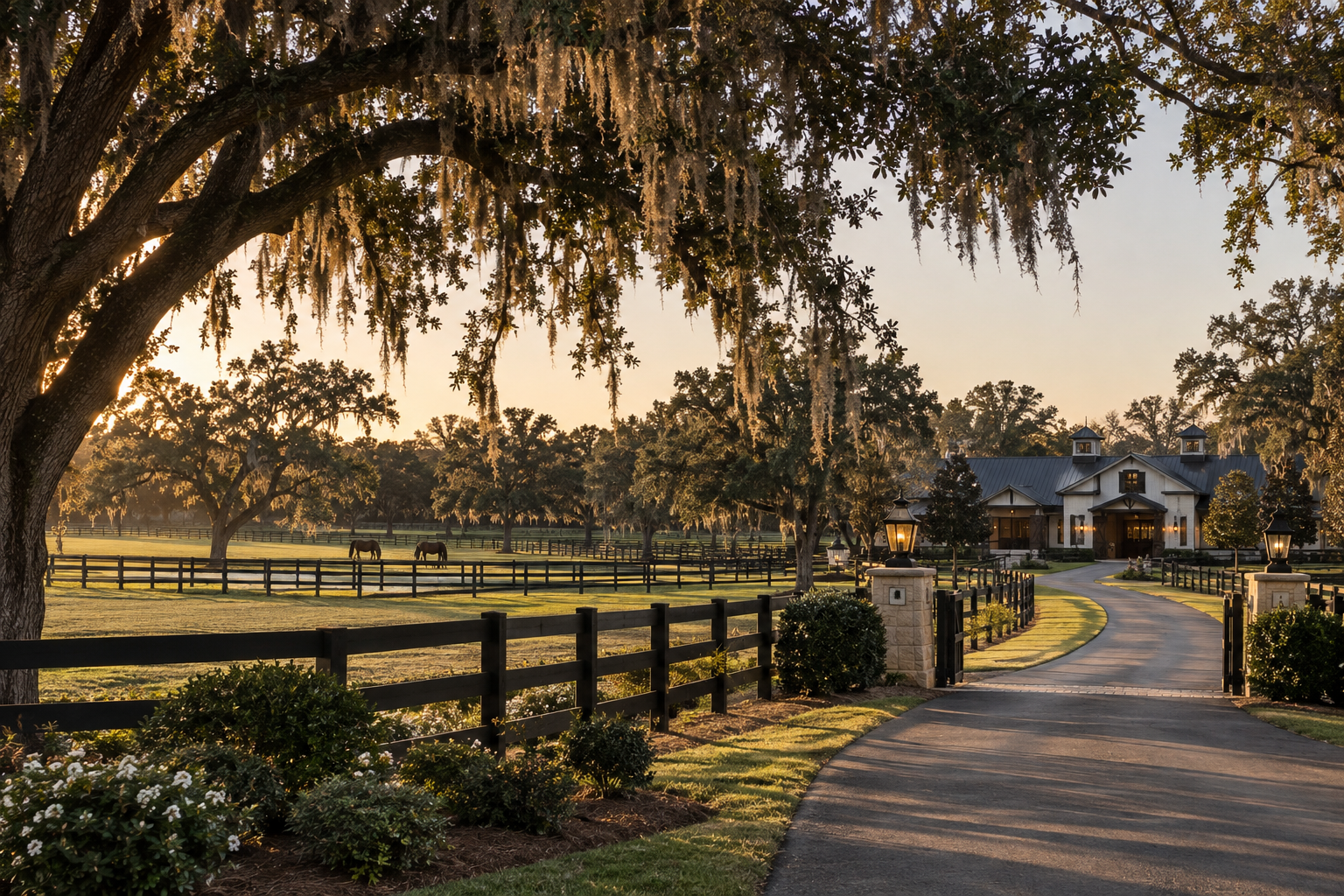
Equestrian Property Brief
A practical brief on Florida horse country.
This brief distills the essentials of buying, evaluating, and relocating to a Florida horse property into one readable page. Each point links to a full guide for the detail behind it. It is written from firsthand horse farm experience and a licensed contractor's perspective, with the reminder that we never replace the engineers, inspectors, attorneys, veterinarians, or land-use authorities you should involve on a specific property.
1. Start with the county, not the listing.
Ocala and Marion County offer the depth of the Horse Capital of the World, with more horses than any other U.S. county and the World Equestrian Center. St. Augustine and St. Johns County offer quieter horse country near the coast, centered on Hastings and Elkton. Gainesville and Alachua County offer farmland near the University of Florida's Large Animal Hospital. The right choice depends on how you keep and use your horses, so we clarify that before looking at listings.
2. Evaluate the working property, not just the home.
A property that works for horses is more than a beautiful home. We look at the land and facilities as one working package:
- Usable acreage: what is fenced, dry, and safe for horses, beyond the total
- Drainage across pastures, paddocks, and around the barn and house
- Barn structure, stalls, airflow, and how the layout supports daily chores
- Fencing type and condition, and whether it is safe for horses
- Arena footing, depth, and how it drains
- Water and power at the barn, plus trailer access and storage
- Zoning, land use, and agricultural classification, confirmed with the county
3. Do the due diligence before you offer.
The paperwork and the land rules matter as much as the barn. Confirm these before you go far in the process:
- Zoning and permitted uses, confirmed with the county planning or zoning office
- Deed restrictions, covenants, and easements that limit your intended use
- Flood zone designation and how water moves across the property
- Wetlands and protected land that may not be usable for horses
- Inspections: home, barn, well and septic, drainage, soil, and termite
- Specialist review by attorneys, engineers, and land consultants where the property warrants it
4. Plan the move of your household and horses.
Relocating with horses is a sequence, not a single day. Build the timeline backward from your move date: secure the property, confirm stalls, fencing, and water are ready, arrange licensed equine transport, complete the required health requirements, and line up a local veterinarian and farrier before arrival.
Go deeper with the full guides
Get the brief and new insights by email.
Sign up to receive the Equestrian Property Brief and new market insights directly. We send updates only when there is something genuinely useful to share, not on a fixed weekly schedule. Your details go to our team for this purpose only, and you can unsubscribe at any time.
This is separate from any property search request. For off-market opportunities, use the property search form.
Sign up for the brief
Email updates on Florida horse country, only when there is something useful to share.