Articles · October 1, 2026
Evaluating a horse farm: acreage, drainage, pasture, barns, and more
By Janie Coffey | Florida Equestrian Properties · 7 min read
The direct answer
Evaluate a horse farm in order: usable acreage, drainage, pasture, fencing, barn, arena, trailer access, water and power, and storage, then confirm zoning and land use with the county. A property that works for horses is more than a beautiful home, and the evaluation is the same whether you are buying a $1.5 million farm or a $15 million estate.
I bring a licensed general contractor's perspective and firsthand horse farm experience to this checklist, and I help you separate deal-breakers from manageable improvements.
Usable acreage
Separate total land, usable turnout, and grazing capacity, because they are different. Total acreage is what the listing advertises. Usable turnout is the portion that is fenced, dry, and safe to keep horses on, which depends on soil, drainage, and layout. Grazing capacity is how many horses a pasture can actually feed, which depends on pasture quality, management, and the season.
UF/IFAS gives a rule of thumb of 2 to 2.5 acres of pasture per 1,000-pound horse, with 1 to 1.5 acres adequate on productive, well-managed sites during the summer growing season, and a minimum of about one-tenth of an acre per horse for turnout and exercise. There is no universal acreage rule that fits every property; the honest answer comes from evaluating the land itself.
“On less productive sites, a mature horse might require 2–2.5 acres of pasture or 1–1.5 acres on productive, well-managed pasture during the summer.”
UF/IFAS EDIS, Pastures and Forage Crops for Horses Source
Drainage
Florida's rainfall means drainage deserves careful attention. Walk the property when the ground is wettest, and again after a hard rain if you can. Look for standing water in low spots, in the pastures, and near the barn and house; check that ditches, swales, and culverts move water off the site; and confirm where water crosses the drive and paddocks.
Ask the seller about flood history and check the property's flood zone designation. Drainage problems are among the most expensive to fix later, so a drainage or land consultant is worth engaging when anything looks questionable.
Pasture
Healthy pasture depends on soil quality, drainage, and the grasses that thrive there. Bahiagrass is the most widely used pasture grass in Florida because it tolerates heat and grazing, and bermudagrass is a tough alternative. Soil testing before establishment and routinely after is the foundation of productive pasture.
Ask about the history of the land and how it has been managed, whether the pasture has been soil-tested, and whether any acreage is wetland or otherwise not usable for horses.
Fencing
Fencing is both a safety feature and a maintenance commitment. Look at the type, the condition, and whether it is safe for horses: no loose boards, sagging wire, or gaps a hoof or head could catch. Ask when the fencing was last replaced and budget for the ongoing upkeep of the perimeter and paddocks.
Barns, arenas, and the working layout
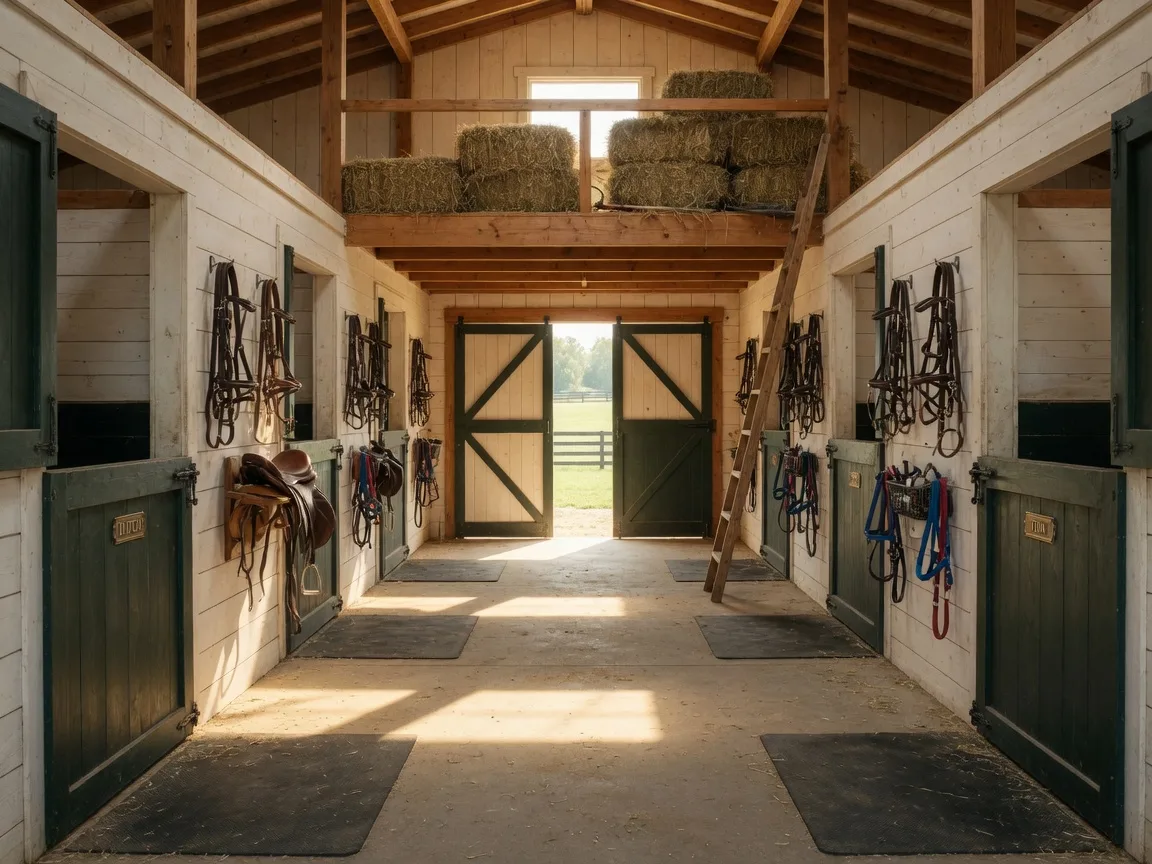
Check the barn's structure, including roof, framing, stall construction, and flooring; then the arena footing, its depth, and how it drains. Confirm water and electricity reach the barn, that drainage moves water away from the buildings, and that the layout supports daily chores like feeding, turnout, and trailer access.
Confirm trailer access: a clear, safe turnaround and enough room to back a trailer to the barn or loading area. And check storage: hay, feed, tack, and equipment all need dry, secure space. Compare the stall count and arena size against your horses and your discipline.
| Element | What to check |
|---|---|
| Usable acreage | Fenced, dry, and safe turnout beyond the total; grazing capacity on the land itself |
| Drainage | Standing water after rain, ditches and culverts, flood zone designation |
| Pasture | Soil testing history, grass species, management, wetland acreage |
| Fencing | Type, condition, safety for horses, and replacement age |
| Barn | Roof, framing, stall floors, airflow, water and power at the barn |
| Arena | Footing depth, drainage, and size versus your discipline |
| Trailer access | Clear turnaround and room to load and unload safely |
| Storage | Dry, secure space for hay, feed, tack, and equipment |
| Zoning and land use | Horses permitted, limits on numbers, boarding or training allowed |
Horse farm evaluation checklist
Frequently asked questions
The questions below come up in most searches, and honest answers make the difference between a right fit and a costly mistake. If yours is not here, I would be glad to answer it directly.
How much usable acreage do I need for my horses?
UF/IFAS suggests 2 to 2.5 acres of pasture per 1,000-pound horse as a rule of thumb, with less needed on productive, well-managed sites in the summer growing season. Turnout and exercise need far less, about one-tenth of an acre per horse as a minimum. The right figure depends on soil, drainage, and how much you supplement with feed.
What should I check before buying a property with a barn and arena?
Check the barn's structure, stalls, and flooring; the arena footing and drainage; water and electricity at the barn; how water moves away from the buildings; and whether the layout supports daily chores and trailer access. Some issues are manageable improvements, and some signal larger problems.
How do I check a horse property for flooding or drainage problems?
Walk the property when the ground is wettest and after a hard rain. Look for standing water in low spots and near buildings, check that ditches, swales, and culverts move water off the site, and confirm the flood zone designation. If anything looks questionable, a drainage or land consultant can evaluate it before you commit.
About the author
Janie Coffey is a Northeast Florida real estate advisor with eXp Realty and a licensed general contractor. Based in St. Augustine, she helps buyers and sellers navigate equestrian properties, farms and acreage, and historic and waterfront homes.
- Zillow
- Realtor.com
- Instagram | @janiec
- Gorgeous Florida Homes Network | Janie's agent bio
- eXp Realty | Legacy & Land Advisory