Articles · October 23, 2026
Owning Florida land for generations: stewardship and preserving rural character
By Janie Coffey | Florida Equestrian Properties · 7 min read
The direct answer
Generational land ownership in Florida is a mindset and a set of practical commitments. It means buying land with the intention to keep it productive, care for its soil and water, and pass it on in better condition than you found it. The tools for that work are concrete: agricultural classification under Florida law, conservation programs that keep farmland in agriculture, water management that respects Florida's hydrology, and daily stewardship of pasture, fencing, and buildings.
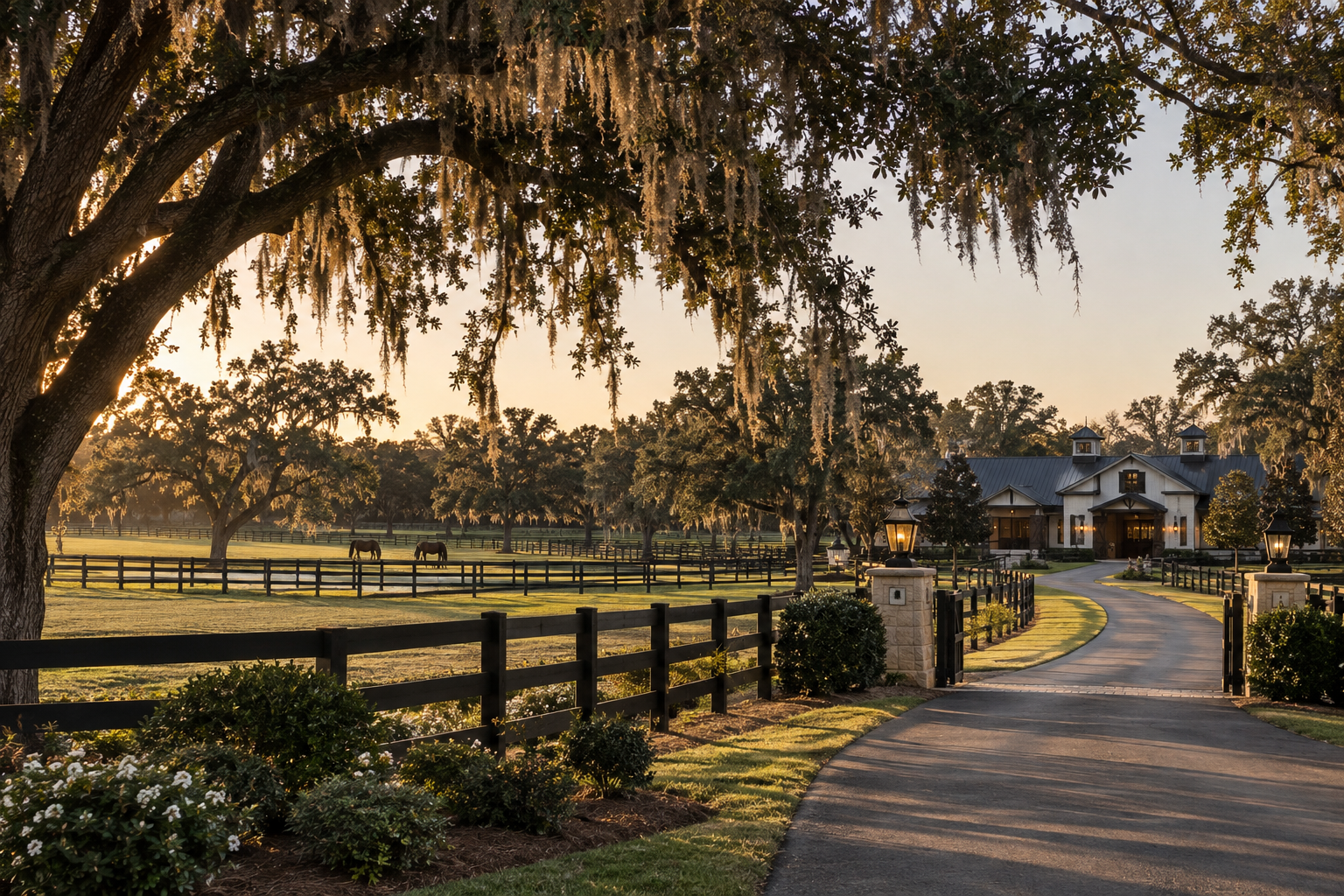
As a 14th-generation Floridian living on a horse farm in the historic farming community of Hastings, this is the way I think about land. My connection to Florida's land is both personal and generational, and it shapes how I evaluate a property: not just whether it looks good, but whether the land and the stewardship behind it will support the life you want to build and the legacy you hope to leave.
What does generational land ownership mean in Florida?
In historic farming communities across Florida, land has often been held and worked by the same families for generations. Hastings and Elkton in St. Johns County, Micanopy in Alachua County, and the farm corridors of northwest Marion County all grew up around working agriculture, and the families who farm them tend to treat stewardship as part of ownership.
That character is more than nostalgia. Land that has been in a family for generations usually carries a working history: established drainage, improved soils, and buildings maintained out of necessity, not just appearance. When that land changes hands, the new owner inherits both the improvements and the responsibility to care for them.
- Generational farmland is typically held by families who have worked it, so its character is agricultural rather than suburban
- Historic farming communities such as Hastings, Elkton, and Micanopy sit in these working landscapes
- Buying into that landscape means joining a community that understands fences, drainage, and livestock
Why does rural character matter to horse-property buyers?
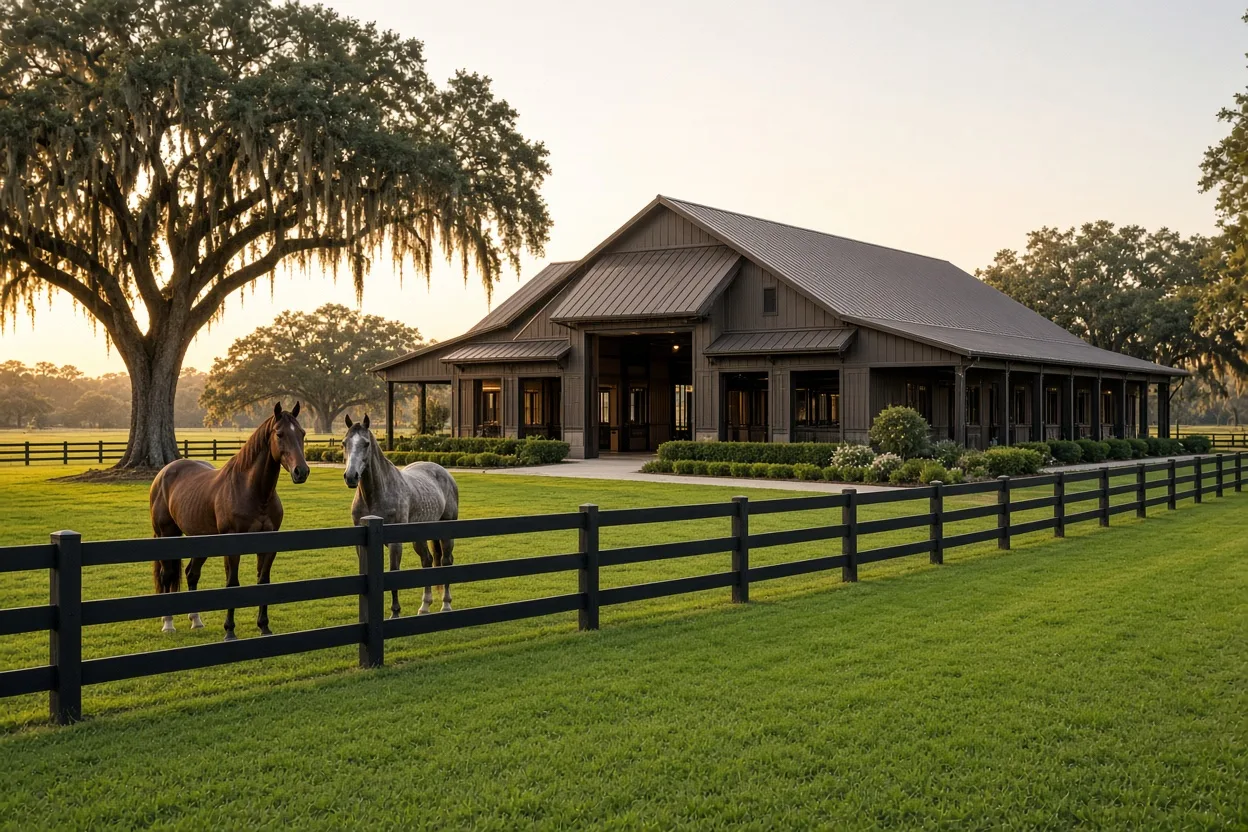
Rural character is a practical fact of the land, not a vague amenity. A horse property surrounded by working farmland has neighbors who understand livestock, roads that accommodate trailers, and a county land-use pattern that supports the agricultural use you intend. A property surrounded by a new subdivision faces different pressures, from complaints about livestock to a land-use plan that may not have anticipated horses.
This is where I offer professional interpretation rather than statistics. Across Marion, St. Johns, and Alachua counties, the farms that work best for horse people sit in communities where the working landscape is protected, whether by county ordinance, by the surrounding land's agricultural use, or by the culture of the place. We verify the zoning and land-use rules for each property with the county, because character varies parcel by parcel.
How does Florida tax agricultural land? The greenbelt classification
Florida's agricultural classification, commonly called the greenbelt law, dates to 1959 and is set out in Florida Statute 193.461. It lets qualifying land be assessed at its agricultural use value, the income the land can earn from normal agricultural use, rather than its highest-and-best-use market value. It is a special use-value classification, not a tax exemption.
To qualify, land must be used primarily for bona fide commercial agricultural purposes as of January 1 of the tax year, and the owner must file the annual application, Form DR-482, on or before March 1. Missing that deadline waives the privilege for that year. The county property appraiser weighs how long the land has been in agricultural use, whether the use is continuous, the purchase price, parcel size relative to the use, and whether the land is being cared for according to accepted agricultural practices.
On a horse property, simply keeping horses is usually not enough to qualify; the use generally needs to be a good-faith commercial operation, such as boarding, training, or breeding for compensation. This is exactly the parcel-specific question I verify with the county before a buyer relies on a tax figure.
- Enacted in 1959 under Florida Statute 193.461
- Assesses qualifying land at agricultural use value, not highest-and-best-use market value
- Requires bona fide commercial agricultural use and an annual DR-482 application due by March 1
- Decided parcel by parcel by the county property appraiser
What conservation tools keep Florida farmland in agriculture?
Several public programs help keep working farmland in agriculture, which is what protects the rural character horse-country buyers are drawn to.
Florida's Rural and Family Lands Protection Program, created in 2001 and run by the Florida Department of Agriculture and Consumer Services, purchases permanent agricultural conservation easements on working farms, ranches, timberlands, and groves. A landowner voluntarily sells the development rights but keeps title to the land and may keep farming it, while the easement permanently restricts non-agricultural development. Since the program began, it has permanently preserved more than 247,000 acres of working agricultural land, with demand growing sharply in recent application cycles.
At the county level, Marion County's Farmland Preservation Area, established in 2005 and written into the county's Comprehensive Plan and Land Development Code, protects roughly 200,000 acres in the county's northwest. It is a major reason most of Marion County's horse farms sit in a protected working landscape.
- The Rural and Family Lands Protection Program buys permanent conservation easements; landowners keep title and keep farming
- More than 247,000 acres preserved since the program began in 2001
- Marion County's Farmland Preservation Area protects roughly 200,000 acres in the county's northwest
- Easements and protections are parcel-specific, so we confirm what applies to a given property
Who manages the water on your land?
Florida manages its water through five regional water management districts, and the districts often split counties. St. Johns County sits entirely within the St. Johns River Water Management District. Alachua County is split, with the eastern part, including Gainesville, in the St. Johns River District and the western part in the Suwannee River District. Marion County is mostly in the St. Johns River District, with the Dunnellon and Villages areas in the Southwest Florida Water Management District.
The district that covers your property governs well permitting, some drainage and wetland work, and water-use restrictions. On a horse property, that can touch everything from a new well to how you manage a wet pasture or a pond.
- St. Johns County: entirely in the St. Johns River Water Management District
- Alachua County: split between the St. Johns River and Suwannee River districts
- Marion County: mostly the St. Johns River District, with Dunnellon and The Villages in the Southwest Florida District
- Well permits, drainage, and water use follow the district and the property, so we confirm them for the parcel you are considering
What does good stewardship look like on a horse property?
Stewardship on a horse property is daily and seasonal work, and UF/IFAS gives it a clear, research-backed shape. Florida's soils are naturally sandy, with low water retention and organic matter, so UF/IFAS recommends testing soil every two to three years before fertilizing and amending pastures to keep them balanced. For many Florida pastures, including bahiagrass, a soil pH in the 5.5 to 6.5 range supports healthy growth.
Good stewardship also means conservation practices: managing grazing so pasture is not overgrazed, keeping drainage moving so water does not pool, maintaining fences and gates so they stay stock-safe, managing manure so nutrients return to the pasture instead of washing away, and keeping the barn and arena in sound condition. UF/IFAS's Florida Land Steward program connects rural landowners with the resources and practices for exactly this kind of care.
- Test soil every two to three years before fertilizing, per UF/IFAS
- Manage grazing, drainage, manure, fencing, and water as one system
- UF/IFAS's Florida Land Steward program offers guidance and resources for rural landowners
- Stewardship is a commitment, and the right property makes it manageable
Questions to ask before you buy land you intend to keep for generations
If your goal is to hold the land and pass it on, add these questions to your due diligence. They are the ones I walk through with buyers who are thinking in generations, and each is confirmed with the county and the right specialist rather than assumed.
- Is the land currently classified agricultural, and is the DR-482 filed each year? What use is the appraiser assessing?
- Are there any conservation easements, deed restrictions, or covenants that limit use or a future sale?
- Is any acreage wetland, and does the water management district require permits for your intended use?
- What is the soil history, and when was the pasture last tested?
- How does water move across the property after heavy rain?
- Is the surrounding land working farmland, and what does the county's land-use plan allow nearby?
Frequently asked questions
The facts in this article are drawn from the primary sources listed below. The interpretation and market guidance are my professional perspective, and property-specific claims are verified with the county before you rely on them.
What does it mean for land to have agricultural classification in Florida?
Agricultural classification, under Florida Statute 193.461, lets qualifying land be assessed at its agricultural use value rather than its highest-and-best-use market value. It requires bona fide commercial agricultural use and an annual DR-482 application due by March 1, and the county property appraiser decides each parcel.
Will a property keep its agricultural classification after I buy it?
Not automatically. The classification is reviewed annually, and the new owner must file the DR-482 application by March 1 and meet the use requirements. We confirm the current status and what the land's use must be to keep it before you rely on the tax figure.
What is a conservation easement?
A conservation easement is a permanent legal agreement that restricts development on the land while the owner keeps title and may continue the agricultural use. Florida's Rural and Family Lands Protection Program uses these easements to keep working farmland in agriculture.
How do I know which water management district my property is in?
Florida has five regional water management districts, and they can split counties. St. Johns County is fully in the St. Johns River District; Alachua County is split between the St. Johns River and Suwannee River districts; Marion County is mostly the St. Johns River District, with the Dunnellon and Villages areas in the Southwest Florida District. The district that covers your parcel governs well permits, drainage, and water use.
Why does rural character matter for a horse property?
Working farmland means neighbors who understand livestock, roads that accommodate trailers, and a county land-use pattern that supports agricultural use. A property in a protected or actively farmed landscape tends to face fewer conflicts and a steadier future for horses, though we verify zoning and land use parcel by parcel.
Sources and further reading
- Florida Statute 193.461, Agricultural lands; classification and assessment
- UF/IFAS Ask IFAS, How to Apply for a Greenbelt Agricultural Tax Assessment (FY1497)
- Florida Department of Agriculture and Consumer Services, Rural and Family Lands Protection Program
- Florida Department of Environmental Protection, Water Management Districts
- St. Johns River Water Management District, About the District
- UF/IFAS Ask IFAS, Improving, Restoring, and Managing Natural Resources on Rural Properties in Florida (FR156)
- UF/IFAS Extension, Happy Soil, Happy Pastures: Tips for Florida Landowners
- Horse Farms Forever, The Farmland Preservation Area
Related reading
About the author
Janie Coffey is a Northeast Florida real estate advisor with eXp Realty and a licensed general contractor. Based in St. Augustine, she helps buyers and sellers navigate equestrian properties, farms and acreage, and historic and waterfront homes.
- Zillow
- Realtor.com
- Instagram | @janiec
- Gorgeous Florida Homes Network | Janie's agent bio
- eXp Realty | Legacy & Land Advisory