Articles · October 20, 2026
Life in Hastings and Florida's historic farming communities
By Janie Coffey | Florida Equestrian Properties · 6 min read
The direct answer
Hastings, in southwestern St. Johns County, is a historic farming community roughly 18 miles southwest of St. Augustine and the heart of the county's horse country. It is known as the Potato Capital of Florida, it has been a working farm town for more than a century, and it anchors the county's equestrian scene around the St. Johns County Equestrian Center.
For horse-property buyers, the character of the town matters as much as any listing. The same generational farmland that built the potato industry shapes the horse farms here: working land, a quiet rural pace, and a stewardship ethic that passes from one generation to the next. I live here, on a horse farm in this community, so this is the character I know firsthand.
A farming town with more than a century of history
Hastings was founded in 1890 by Thomas Horace Hastings, a cousin of railroad and hotel magnate Henry Flagler. On land owned by Flagler's Model Land Company, he established Prairie Garden, a large experimental farm whose greenhouses and fields grew winter vegetables, especially potatoes, to supply Flagler's resort hotels in St. Augustine.
The town grew up around the Florida East Coast Railway, incorporated in 1909, and Irish potatoes became its big money crop, earning Hastings the nickname Florida's Potato Capital. A wave of irrigation on the region's clay subsoil in the 1920s brought a new era of commercial potato growing, and the town grew into the packing and shipping center for a potato region that still spans Flagler, Putnam, and St. Johns counties.
The town government was dissolved in 2018, and Hastings now operates as unincorporated St. Johns County, with the county working to preserve the community's Potato Capital heritage.
- Founded in 1890 on Flagler-era farmland; incorporated as a town in 1909; unincorporated St. Johns County since 2018
- Known as Florida's Potato Capital for the crop that built it
- A packing and shipping center for the tri-county potato region since the 1920s
Potato country, still working
Agriculture is not a museum piece in Hastings; it is the working character of the place. Potatoes, cabbage, onions, eggplant, and ornamental horticulture are grown in the surrounding fields today, and the Northeast Florida growing region puts more than 20,000 acres into potatoes each year.
The UF/IFAS Hastings Agricultural Extension Center, founded in 1923, has run potato variety trials there for more than 50 years and recently launched a breeding program aimed at developing a potato bred specifically for Florida growing conditions. The center's downtown lab and research plots, along with a 50-acre research farm, sit in the heart of the same farmland where the area's horse properties are found.
- More than 20,000 acres of potatoes across the Northeast Florida growing region each year
- UF/IFAS Hastings Agricultural Extension Center: potato variety trials and a Florida-focused potato breeding program
- Cabbage, onions, eggplant, and ornamental horticulture round out the farm economy
What a farming heritage means for horse-property buyers
This history matters to a horse buyer because it tells you what kind of community you are joining. In a historic farming town, land has often been held and worked for generations, and the people who sell it tend to treat stewardship as part of ownership. That mindset is the reason most horse farms here sit in a working landscape rather than a new subdivision.
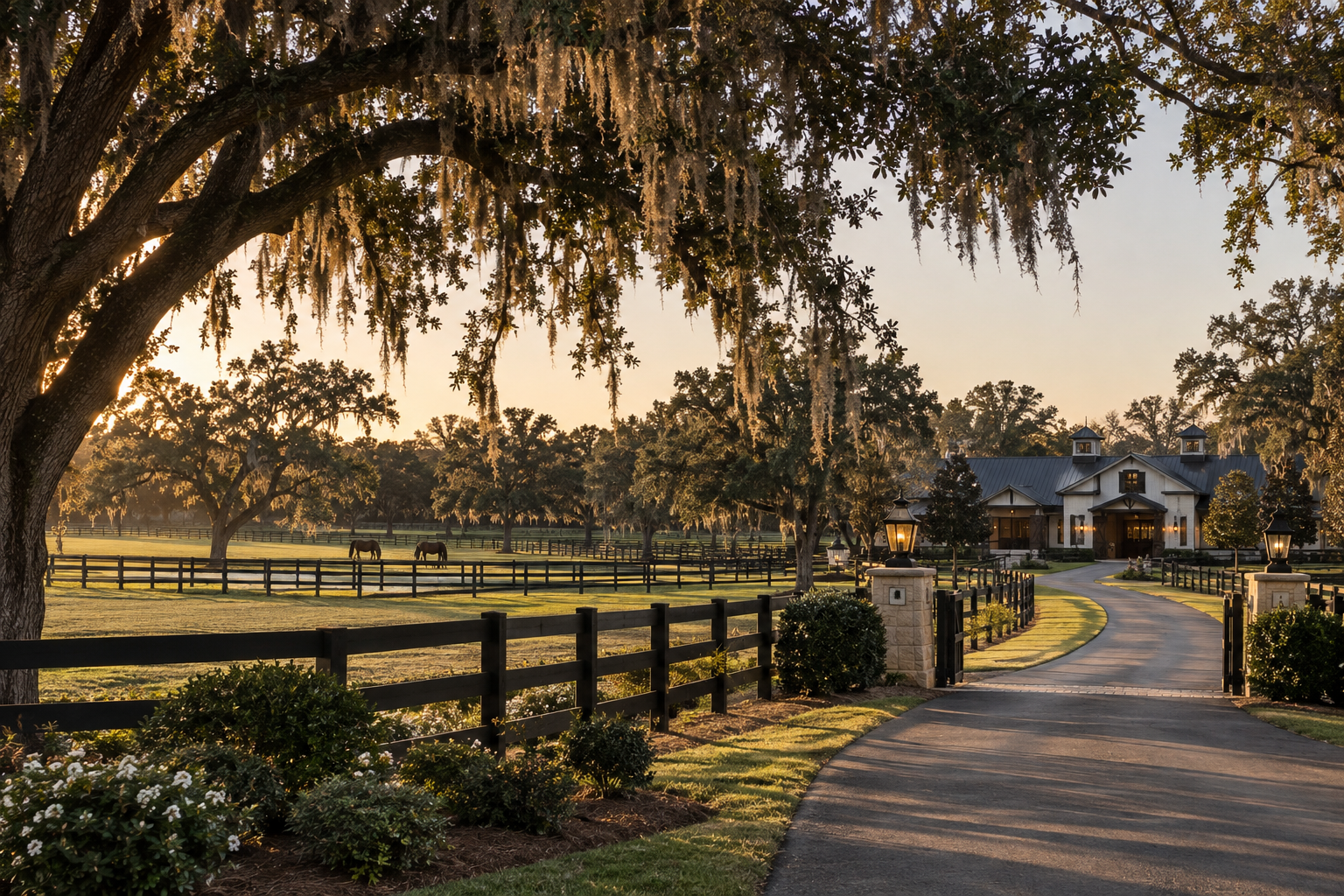
A farm in Hastings country usually means a house, a barn, fenced pasture, and room around it, among neighbors who understand fences, drainage, and livestock. The rhythm of the place is agricultural, which suits people who want life on the land, a genuine sense of place, and room to breathe.
This is also where my own connection to the area comes from. As a 14th-generation Floridian living on a horse farm in this historic farming community, I see the practical side of that heritage every day. It shapes how I evaluate a property: not just whether it looks good, but whether the land, the buildings, and the stewardship behind them will support the life you want to build.
- Generational farmland means a community that understands working land
- An agricultural rhythm rather than a subdivision character
- Stewardship and legacy are part of how property here is bought and sold
The equestrian anchor: the St. Johns County Equestrian Center
The center of the county's organized equestrian life is the St. Johns County Equestrian Center at 8200 Smith Road in Hastings, a 20-acre facility within the larger county fairgrounds complex. It offers a stable with 24 concrete-block stalls, riding arenas, and event space, and it is managed and operated with the St. Johns County Horse Council.
Beyond the center, the county maintains designated horseback riding trails across more than 120 acres, and the surrounding communities of Hastings and Elkton hold boarding farms and private trail properties along quiet country roads.
- St. Johns County Equestrian Center: 24 concrete-block stalls, riding arenas, and event space at 8200 Smith Road
- Designated county horseback riding trails across more than 120 acres
- Boarding farms and private trail properties around Hastings and Elkton
What day-to-day life is like
Hastings is a small, rural community of roughly 1,200 to 1,300 residents, with everyday services concentrated in St. Augustine, about 18 miles away, and in Palatka to the west. That drive shapes the practical picture for buyers, so we measure the real distance from each property to the services you rely on.
The town has been through a downtown revitalization in recent years. Annual Main Street festivals, including a fall arts festival and a spring cabbage, potato, and bacon festival, draw visitors, and the Florida Agricultural Museum, a living-history site preserving the state's farming heritage, sits nearby in Palm Coast.
None of this changes the honest trade-off. You are choosing a quieter life on working land, close to the coast and a historic city, and the daily errands and services are a drive away. Getting that clear early is what separates a right fit from a costly mismatch.
- A small community of roughly 1,200 to 1,300 residents
- Everyday services are a drive away, mostly in St. Augustine, about 18 miles east
- Annual Main Street festivals and a revitalized downtown draw visitors
- The Florida Agricultural Museum, a living-history farm museum, is nearby
Practical questions to ask before you buy here
If the community appeals to you, the property still has to work for your horses. The same evaluation standards apply here as anywhere in Florida horse country, with a few local notes.
- Soils and drainage: Hastings sits in the low coastal plain, so usable acreage and how the land drains after heavy rain deserve a close look on the land itself
- Zoning and permitted use: confirmed with St. Johns County planning and zoning for each property
- Water and septic: well and septic systems are typical outside the city, so testing is part of due diligence
- Distance to services: equine veterinary care, the Equestrian Center, and St. Augustine vary by property, so we measure the drive from each farm
- Agricultural classification: land in bona fide agricultural use may qualify for a lower assessment under Florida Statute 193.461, with the DR-482 application due by March 1
Frequently asked questions
The facts in this article are drawn from the primary sources listed below. The interpretation and market guidance are my professional perspective, and property-specific claims are verified with the county before you rely on them.
Where is Hastings, Florida?
Hastings is a community in southwestern St. Johns County, about 18 miles southwest of St. Augustine. It sits in the county's historic farming corridor that also includes Elkton.
Why is Hastings called the Potato Capital of Florida?
Irish potatoes were the crop that built the town after its founding in 1890, and the surrounding region still grows more than 20,000 acres of potatoes each year. The UF/IFAS Hastings Agricultural Extension Center conducts potato research in the town.
Is Hastings a town with its own government?
Hastings incorporated as a town in 1909 but dissolved its charter in 2018. It is now governed as unincorporated St. Johns County, which has worked to preserve the community's Potato Capital heritage.
Is Hastings a good place to live with horses?
For buyers who want a quiet life on working land, yes. The county's horse country centers on Hastings and Elkton, anchored by the St. Johns County Equestrian Center, and I live on a horse farm in this community myself. The trade-off is that everyday services are a drive away, mostly in St. Augustine.
How far is Hastings from St. Augustine?
Roughly 18 miles, about 25 to 30 minutes by car depending on the exact property and traffic. The county's designated riding beaches are a longer trailering outing from here, so beach riding is planned as a separate trip rather than a ride from the barn.
Sources and further reading
- Town of Hastings, Our History
- Historic Coast Culture, Hastings: Florida's Potato Capital
- UF/IFAS Hastings Agricultural Extension Center
- St. Johns County, Equestrian Center
- St. Johns County Horse Council, Equestrian Center
- Florida Agricultural Museum (Florida Agricultural Legacy Learning Center)
- Visit St. Augustine, Hastings region
Related reading
- Owning Florida land for generations: stewardship and preserving rural character
- Buying a horse property near St. Augustine and in St. Johns County
- Keeping horses near St. Augustine: beach access and coastal horse country
- St. Johns County horse properties and equestrian estates
- St. Augustine horse properties and equestrian estates
About the author
Janie Coffey is a Northeast Florida real estate advisor with eXp Realty and a licensed general contractor. Based in St. Augustine, she helps buyers and sellers navigate equestrian properties, farms and acreage, and historic and waterfront homes.
- Zillow
- Realtor.com
- Instagram | @janiec
- Gorgeous Florida Homes Network | Janie's agent bio
- eXp Realty | Legacy & Land Advisory